jueves, 13 de mayo de 2010

Module 12: Europe (summary)


Known as the old continent, Europe has a population of 735 million people distributed in 49 countries. This makes Europe one of the most (if not the most) diverse continents in the world. We can find a mixture of many different cultures, religions, backgrounds and languages coexisting in Europe, some of the in a very efficient and pacific way, others not that much.


When talking about Europe it is necessary to talk about the European Union. It is constituted by 27 countries of Europe and its origins can be found in the early 50s. Nowadays it constitutes the most powerful economy in the world. There are some European countries that are not part of the EU but they want to be. The case that we are going is precisely between one member and one candidate, Germany and Turkey, and the Turkish migration.


This migration finds its origins since the 17th and 18th centuries when the Ottoman Turks attempted to expand their territories through the Balkans. The German-Turk relations were strengthened by the mutual support of both during the different conflicts, especially the World War I. nevertheless it was during the post war period when the migration became to be massive.
Decimated by the war the German soldiers were not able to cover the labor force needed when they came back to their home. Until 1950 this gap in the demand was covered by the fugitives of the East Germanic zones. After this period Germany suffered a huge lack of qualified handlabor, so they created the concept of “Gastarbeiter” (guest worker), many of whom were Turkish men. These guest workers were expected to leave a few years later but they didn’t, starting this way the Turkish population of Germany.


Negative sentiments towards immigrants are often expressed as fears that immigrants adversely affect the economic welfare of the native population. These sentiments are not an exception in Germany, which have had led to many intercultural conflicts between locals and migrants, and the main problem in Germany is that the solution has to be by consensus and integration, but none of the parts want to do concrete actions. Turks want to preserve everything of their culture, but they have to adapt some aspects since they are in a foreign country; and Germans have to help to make the transition. Since none of them is doing anything concrete we can say that the conflict may take a long time to find a solution.
References:
Class presentation

Module 11: Islamic banking

Islamic banking refers to a system of banking or banking activity that is consistent with the principles of Islamic law and its application through the development of Islamic economics. A number of innovative concepts and techniques were applied in early Islamic banking, including bills of exchange, the first forms of partnership (mufawada) such as limited partnerships (mudaraba), and the earliest forms of capital (al-mal), capital accumulation (nama al-mal), cheques, promissory notes, trusts, startup companies, transactional accounts, loaning, ledgers and assignments.

Islamic banking has the same purpose as conventional banking except that it operates in accordance with the rules of Shariah, known as Fiqh al-Muamalat (Islamic rules on transactions). The basic principle of Islamic banking is the sharing of profit and loss and the prohibition of riba (usury). Common terms used in Islamic banking include profit sharing (Mudharabah), safekeeping (Wadiah), joint venture (Musharakah), cost plus (Murabahah), and leasing (Ijarah).

In an Islamic mortgage transaction, instead of loaning the buyer money to purchase the item, a bank might buy the item itself from the seller, and re-sell it to the buyer at a profit, while allowing the buyer to pay the bank in installments. However, the bank's profit cannot be made explicit and therefore there are no additional penalties for late payment. In order to protect itself against default, the bank asks for strict collateral. The goods or land is registered to the name of the buyer from the start of the transaction. This arrangement is called Murabaha. Another approach is EIjara wa EIqtina, which is similar to real estate leasing. Islamic banks handle loans for vehicles in a similar way (selling the vehicle at a higher-than-market price to the debtor and then retaining ownership of the vehicle until the loan is paid). There are several other approaches used in business transactions. Islamic banks lend their money to companies by issuing floating rate interest loans. The floating rate of interest is pegged to the company's individual rate of return. Thus the bank's profit on the loan is equal to a certain percentage of the company's profits. Once the principal amount of the loan is repaid, the profit-sharing arrangement is concluded. Further, Mudaraba is venture capital funding of an entrepreneur who provides labor while financing is provided by the bank so that both profit and risk are shared. Such participatory arrangements between capital and labor reflect the Islamic view that the borrower must not bear all the risk/cost of a failure, resulting in a balanced distribution of income and not allowing lender to monopolize the economy.


Islamic banking is restricted to Islamically acceptable transactions, which exclude those involving alcohol, pork, gambling, etc. This is the concept of ethical investment complemented with moral purchasing under the islamic banking.


Islamic banking system has been gaining a lot of share in te whole world. One of Germany's biggest banks, Deutsche Bank, announced a joint venture with Ithmaar Bank of Bahrain and Abraaj Capital of Dubai to launch a $2bn Sharia-compliant financial fund. The banks say the fund is designed to boost education initiatives and investment in media and energy companies, and infrastructure in the Middle East. More and more conventional international banks, such as Citibank, HSBC and UBS, are converting some of their services to interest-free Islamic finance models. Looking at this we can say that there is a big potential in the future for the Islamic banking system.


References:

Module 11: Middle East (summary)


When talking about the Middle East we are talking about a region located in the southwest Asia and Egypt. The Middle East has always been a centre for world affairs throughout history and also nowadays remains as a strategically region in many aspects.

We can find a huge diversity in both religions and cultures. We can find religious groups as Arabs, Turks, Persians, Jews, Kurds, between many others; nevertheless we can say that Muslims are the main group (followed by Christians and Jews).


We will focus our study in Israel. Israel is the main Jew country in the world. Its origins are found in 1947 where the division of Palestine was purposed in order to create a Jewish state. The idea was accepted by Jews by rejected by the Arabs. Israel is considered one of the most developed countries in southwest Asia and we can find important cities such as Jerusalem and Tel Aviv.


There is a specific and very interesting phenomena occurring in Israel. This is of course, the Kibbutz and its particular management style. Kibbutzes are societies based on mutual aid and social justice and have a socioeconomic system in which people share work and property. The social organization of work is unique in Kibbutz society. It is based on democratic foundations, with equal say for all members on work planning and the division of labour within their agricultural or industrial branch. They don’t use any differential type of retribution for the members, their reward is motivational.

It is important to clarify that the Kibbutz system has evolved along the history to become what we know now. It started as a miracle done in the hostile lands of the desert, and it was built up under some socialist principles. We cannot say that it was part of the former Soviet Union but some of their ideals and goals matched with the ones of the communist power. Nevertheless the systems in the Kibbutz have evolved in an accelerated way becoming in a very efficient capitalist form.


Nowadays we can find differentiation in the Kibbutz, where different members can earn more money and save at their own will. Even if many aspects of this practice have changed, the common ideals shared by its people are still very strong, and we can assure that Kibbutz is a very important source of power (both cultural and economic) for Israel.


References:
Class presentation
http://www.autosuficiencia.com.ar/imagenes/israel.gif
http://communa.org.il/hcommuna/tmunot/34-comun.jpg
http://www.good-hotels-guide.com/middle-east/middle-east.gif


Module 10: Africa (question)


We will analyze the Ubuntu philosophy and its application to a very specific case. We will see how it helped in the case of the African Bank Miners Credit. In order to understand the context of the case it is important to know what this organization is. Established in 1993, African Bank Miners Credit is a division within African Bank. The company provides mine workers with access to finance. The challenge was to change the traditional behavior and mentality of the mining population and merge it with the new financial program. They were planning to do so by using the Investors in People (IIP) standards, but it was needed to be careful in the process. It was successfully done due to the implementation and internalization of the process by applying the Ubuntu philosophy. Now we will see what is exactly Ubuntu and how did it help.


Ubuntu is premised on the philosophy that one finds one’s own humanity in helping others to find theirs. It is a philosophy that reinforces the collectivist behaviors and creates a strong sense of community. It is a common philosophy in Africa no matter the differences in tribes or particular traditions. It argues that their existence depends on the welfare of the others, “I am, because we are”. At the workplace, Ubuntu generates trust for the relatives, a preeminence of the collective, kinship ties, teamwork, and also is very important to legitimate the power.


As a perfect example of the integration of the Ubuntu culture into the organiz

ation, African Miners Credit has used drums as an important part of the Ubuntu process and e

very employee has been given a drum. An Ubuntu drum even stands beneath the company’s Investors in People plaque. Drums have been used to symbolize communication and loyalty.


Another clear example of a successful measure was the explanation of the five key areas that the company would be focusing on using the medium of storytelling. Every employee was given one of the company’s “Our Ubuntu” booklets, which not only explained the Ubuntu culture campaign, but how employees would be able to contribute towards the overall success of the campaign.


Ubuntu was also an important tool to eradicate fraud from the organization, if one person is dishonest; this impacts negatively on the entire company. Employees were told that it was everyone’s responsibility to work together to eradicate dishonest practices and to create an environment in which respect, trust and honest business practices are upheld. They were also instructed to report any dishonest practices, irrespective of the level of the perpetrator.

References:

African Bank Miners Credit – Case Study
http://media.photobucket.com/image/ubuntu%20africa/MotherTongues/SouthAfrican8.gif
http://www.ruby-sapphire.com/images/madagascar_sorcerers/swiss_bank_low.jpg

miércoles, 12 de mayo de 2010

Module 10: Africa (summary)

Africa is the world's second-largest and second most-populous continent, after Asia. This continent is composed by 61 territories, most of them defined after the European colonization it suffered. We are going to see some of these countries and its characteristics.


When talking about Africa it is essential to make reference to one of its most important countries, South Africa. We can consider South Africa as a country with a huge diversity, with over 47-million people of diverse origins, cultures, languages and beliefs. As a legacy of the British colonization we can find many white people in the country, and also English plays an important role as spoken language. We can find a huge diversity of other languages in the country (mainly native dialects). We can find another important footprint of the colonization by looking at the religious beliefs; two-thirds of South Africans are Christian, mainly Protestant; Islam, Hinduism and Judaism also play a significant role. South Africa has suffered a lot of different processes and has been exploited during it history. The discovery of diamonds and gold has motivated since the XIX century the arrival of outcomers looking for the wealth of the country. We will focus in all the problems that the diamonds as a resource have brought to South Africa and many other countries of the continent. An important player when talking about diamonds is the De Beers company, it was founded by Cecil Rhodes 110 years ago in South Africa, and its Central Selling Organization (CSO), dominate the diamond industry Together, De Beers and the CSO sell about 80% of the diamonds in the world market.

Another country that has been victim about the problems brought by the so called “blood diamonds” is Angola. In this country the diamonds have been source of internal wars and rebellions. The rebel leader of the National Union for the Total Independence of Angola (UNITA) funded the war primarily from diamond sales which has given a lot of power to this movement. Sierra Leone’s case is very similar to this one.


Due to all these conflicts it was developed the Kimberly process. It certifies the trade of legal diamonds, assuring that they are “conflict free”. This helps to support the development of the region by legal means. Today 49 participants covering 75 countries are part of this process.
References:
Class presentation

Module 9: South Asia (Question)


Compare CAMS’ organisational culture vs. India’s traditional management style. Choose at least 3 aspects and use examples to illustrate differences or similarities.


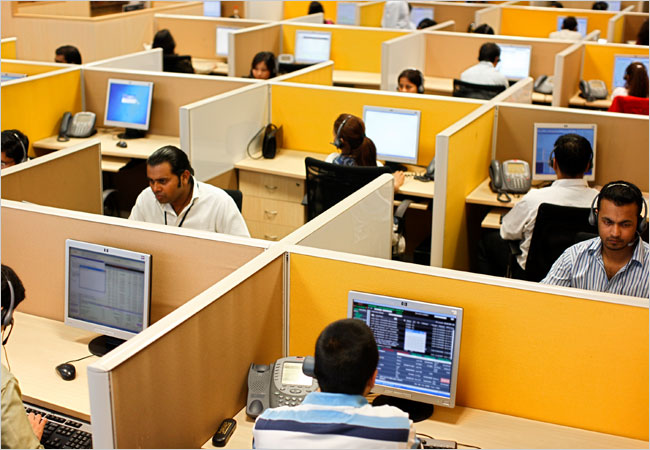
In this blog entry we are going to see the case of CAMS (Computer Age Management Services) Ltd. This is a company operating in the highly competed market of outsourcing in India. Now we are going to compare CAMS’ organizational culture with the traditional Indian management style. Looking at both we can identify some similarities (as it is logical because of being an Indian company); nevertheless I consider that it is more interesting to focus in the differences that allow CAMS to be a differentiated leader.


The first of them is that CAMS don’t do any kind of discrimination in their recruitment process based on casts or status. They focus on the candidate’s skills and qualifications. We can find the perfect example of this when we see that CAMS make its recruitment by using “all available channels of recruitment, including advertisements, employment agencies, employee referrals, walk-ins, job sites and write-ins.” We saw in the previous study that a common problem in the Indian management style is precisely its discrimination (mainly due to castes systems) which normally has consequences such as mediocrity in the work.


The second and third main differences are tightly related with each other. In the Business Process Outsourcing industry there are normally few possibilities of growing professionally and grow in a career. Nevertheless CAMS break this rule by believing that their employees can do so in their company. They have “The CAMS Functional Certification Program (CFC).” Through this program, employees have an option to graduate as specialists or experts in more than one functional area. This way they can succeed as professionals and a career in the company.


It is precisely this last part the other difference. In the outsourcing industry it is common to see that handlabor is commonly easy to replace and that there are no big ties between the company and the worker. CAMS is very concerned about this point and is interested in building long term relations with the employees of the company and to become permanent members of it. As I said before, this issue is linked with the past one. We can see this for example in the high level of exigency and selective basis by which they re-accept a former worker who had left the company and want to come back in order to “teaching them a lesson”.
References:
- Vijaya, T.G., D`Netto, Brian and España, Juan. 2007. “HR Challenges at Computer Age Management Services (P) Ltd.” The Management Case Study Journal 7 (2): 41-51.

jueves, 6 de mayo de 2010

Module 9: South Asia (summary)


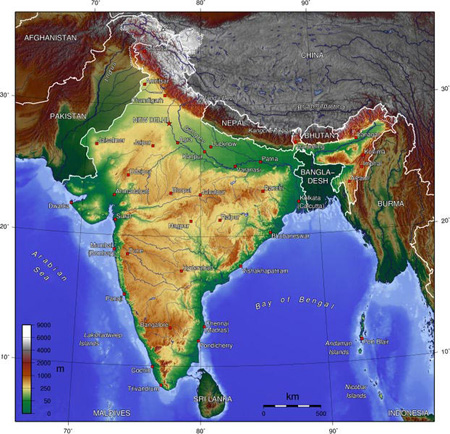
When we talk about South Asia we must have clear that we are talking by the region conformed by: Afghanistan, Bangladesh, Pakistan, India, Nepal, Bangladesh, Bhutan, Maldives and Sri Lanka. This region has a population of more than 1.5 billion people what makes it one of the most populated regions in the world. This region also has the biggest production of rice grains and exotic spices in the world. The region is composed by a rich mixture of several different cultures and religions. We can find religions such as Buddhism, Islamism, Hinduism, between some others. In this blog we will focus in one specific country of the region: India.


India is one of the most populated countries of the world (after China) with almost 1.2 billion of inhabitants. The main languages spoken in India are the Hindi and the English, even though there are more than 400 different languages and dialects (most of them derived from the Hindi).
Indian culture is strongly influenced by the Hinduism or Sanatana Dharma which main concepts can be summarized as: Maya (visible world), Samsara (spiritual reincarnation), Karma (goodness and badness earned), and Dharma (the must be, must act law under a specific birth situation).


India can find one of its main strengths in its diverse nature, which help to complement the abilities of the society in a harmonized way. Indian middle class is the largest one impulsing the economy towards the development.

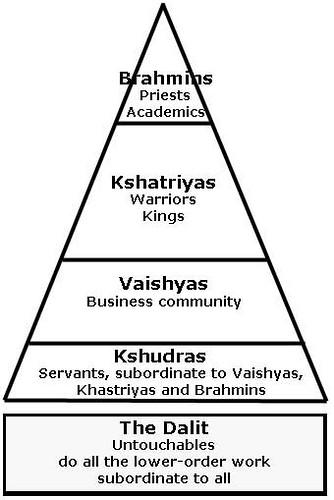
A critical issue to be understood in the Indian culture is their cast system. The caste system is a type of social structure that divides people due to their inherited social status. In this system people is expected to interact and be married only with people of the same class. The system goes from the Brahmin, Kshatriya, Vaishya (middle class), Sudra, until the Dalits (the “untouchable”).

The implementation of the castes system normally leads to discrimination in all aspects. Nevertheless it is forbidden by law to make such discriminations such as “untouchability”. Despite of this legal support, the discrimination and oppression of the highest classes to the lowest is still remarkable.
One of the main problems with the fight between castes and the interventions done to fight against it is the higher levels of mediocrity seen in the companies due to the selection of unqualified workers just because they are from one caste, or in the other hand just because they have to fill a quota of castes imposed by the government (which finally lead to more discrimination).

Thanks to India’s economic expansion, industries are paying less attention to castes, and are looking beyond their traditional sources of employees which have led to a better inclusion of different sectors in the society and to a certain level of less discrimination. Multinationals don’t care about the caste system, but to find competitive and qualified workers in order to compete in the international market.
References:
Class presentation